
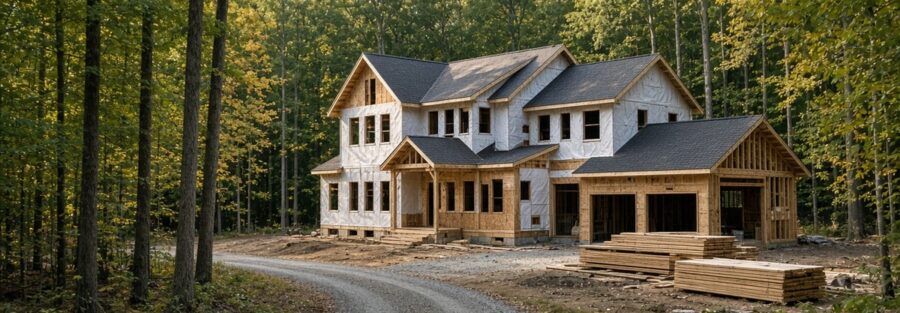
A Fox Chapel project is often a custom house: a long calendar, several trades, a wooded lot, and a construction lender that wants to be named on a policy before the first draw. That is a different insurance conversation than a short occupied remodel. This article looks at what to review on a builder’s risk quote for a custom build or a large custom addition in Fox Chapel. It does not quote a property value, and it does not promise that a policy will be issued or will pay a particular claim.
For the product overview, see builder’s risk insurance. For the state hub and the city page, see builder’s risk insurance in Pennsylvania and builder’s risk insurance in Fox Chapel.
A long custom calendar and who is named
Custom homes often run longer than the first schedule on the permit board. Finish work, special-order windows, or a change in the plan can add months. The policy term should be written for the calendar you actually expect, and it should be revisited if that calendar slips. Extensions are not automatic.
Naming is the other early question. The owner, a builder, an entity formed for the project, and a lender may all have an interest. Ask who must appear on the issued form, in what role, and whether two policies — the builder’s and the owner’s — are being assumed to do the same job. Confirm it in writing. A draw schedule is not a substitute for a named-insured review.
If architects, owner’s representatives, or several subcontractors will be on site, the construction contract and the liability coverage still matter. Builder’s risk is property coverage for the structure and, depending on the form, certain materials. It is not a stand-in for a general liability discussion.
A wooded lot, deliveries, and an unattended frame
Many custom lots here are wooded and set back from the road. Deliveries travel a drive that may be unfinished. Materials may sit under a tree line or in a temporary container. Ask how the form treats storage on a low-traffic site, including evenings and weekends when the frame is standing and no one is present. Theft and vandalism questions are ordinary on a quiet custom site; the answers belong in the quote.
If the project includes a garage, a guest space, or a later phase, say which structures are part of the first policy. A “we will add the garage in the spring” plan should be written into the insurance file when that work actually starts, if it was not included from the beginning.
Questions to review before the first draw
- What is the expected start and end date, including interior finish and punch list?
- Who is named on the policy, and does that match the loan and the construction contract?
- What limit is being quoted, and does it include the full scope or only a first phase?
- Where will materials be stored on a set-back or wooded lot?
- How will a delay or a change order be handled with the carrier?
- When the house is finished, what policy is meant to replace the builder’s risk, and on what date?
Keep the quote, the application, and the issued form with the project documents. Lenders often ask for them; so will a later homeowners review at closing.
What this article does not do
This article does not say that every Fox Chapel project requires builder’s risk, and it does not interpret municipal or permit rules. Confirm those with the official office that reviews the property. Coverage depends on the cause of loss and the policy terms, subject to underwriting and eligibility. No property value or premium is stated here.
Frequently asked questions
The lender will not release a draw without a builder’s risk policy. What should be on it?
Ask the lender what they require to be named and for what term, then confirm that the issued policy actually matches that request. Do not rely on a binder that has not been checked against the lender’s wording.
Our custom house may take 18 months instead of 12. Can we just wait and extend later?
You can ask, but an extension is subject to the carrier and is easier to discuss before the policy expires. If you already know the calendar is long, start with a term that reflects that.
The lot is wooded and not visible from the road. Does that matter?
It can matter to how storage, theft, and access are described. Put those site facts on the application rather than leaving them out.
When the house is done, can we switch straight to a homeowners policy?
Often that is the intended next step, but the timing should be planned so there is no silent gap on the day the builder’s risk ends. Ask your agent to coordinate the two dates.
Talk with Peak Insurance
If you are planning a custom home or a large custom addition in Fox Chapel, Peak Insurance can review the term, the named insureds, and the site details with you before the first draw. Call 855-449-8552 or request a quote.
